

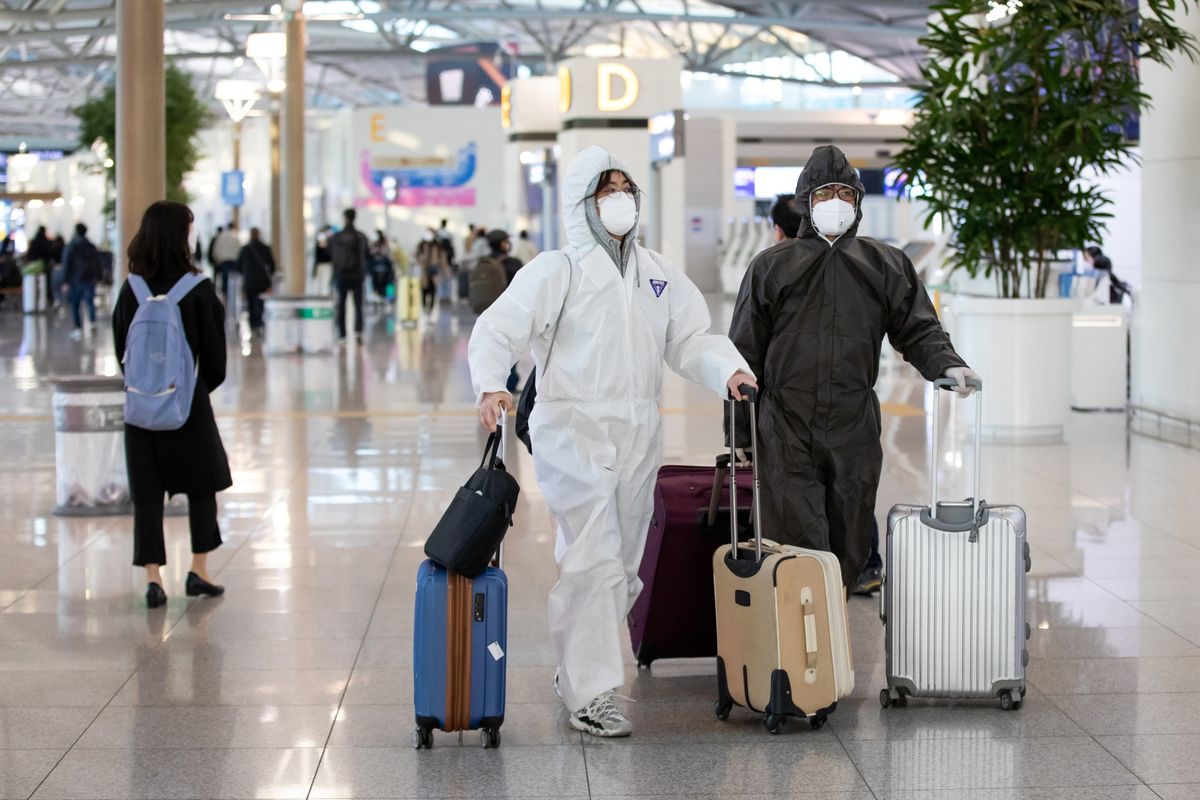
As spring approaches, so do Spring Break vacations out of state and abroad. This year, people may still be questioning whether or not they should go away on vacations. For those who are considering traveling, here are a few things the CDC recommends travelers to consider
According to the CDC, travel increases your chance of spreading and getting COVID-19. CDC recommends that you do not travel at this time. Delay travel and stay home to protect yourself and others from COVID-19.
If you must travel, here are some important questions to ask yourself and your loved ones beforehand.
- Are you, someone in your household, or someone you will be visiting at increased risk for getting very sick from COVID-19?
If you get infected, you can spread the virus to loved ones during travel and when you return, even if you don’t have symptoms. If your household includes one or more individuals at increased risk for severe illness, all family members should act as if they themselves are at increased risk. Learn how to protect yourself and others. - Are hospitals in your community or your destination overwhelmed with patients who have COVID-19? To find out, check state, territorial, and local department websites.
- Does your home or destination have requirements or restrictions for travelers? Check state, territorial, and local requirements before you travel.
- During the 14 days before your travel, have you or those you are visiting had close contact with people they don’t live with?
The following activities can put you at higher risk for COVID-19:
-
- Going to a large social gathering like a wedding, funeral, or party.
- Attending a mass gathering like a sporting event, concert, or parade.
- Being in crowds like in restaurants, bars, fitness centers, or movie theaters.
- Taking public transportation like planes, trains, or buses, or being in transportation hubs like airports.
- Traveling on a cruise ship or riverboat.
-
- Do your plans include traveling by bus, train, or air, which might make staying 6 feet apart difficult?
- Are you traveling with people who don’t live with you?
If the answer to any of these questions is “yes,” you should delay your travel.
If you must travel, take these steps to protect yourself and others from COVID-19:
- If you are eligible, get fully vaccinated for COVID-19. Wait two weeks after getting your second vaccine dose to travel—it takes time for your body to build protection after vaccination.
- Get tested with a viral test 1-3 days before you travel. Please keep a copy of your test results with you during travel in case you are asked for them. Do NOT travel if you test positive.
- Check travel restrictions before you go.
- Wear a mask over your nose and mouth when in public settings. Masks are required on planes, buses, trains, and other forms of public transportation traveling into, within, or out of the United States and in U.S. transportation hubs such as airports and stations.
- Avoid crowds and stay at least six feet/ meters (about two arm lengths) from anyone who did not travel with you. It’s important to do this everywhere — both indoors and outdoors.
- Wash your hands often or use hand sanitizer (with at least 60% alcohol).
- Bring extra supplies, such as masks and hand sanitizer.
- Avoid contact with anyone who is sick.
- Avoid touching your eyes, nose, and mouth.
Do NOT travel if you were exposed to COVID-19, you are sick, or you test positive for COVID-19. Learn when it is safe for you to travel. Don’t travel with someone who is ill.
Get Tested Before and After Travel
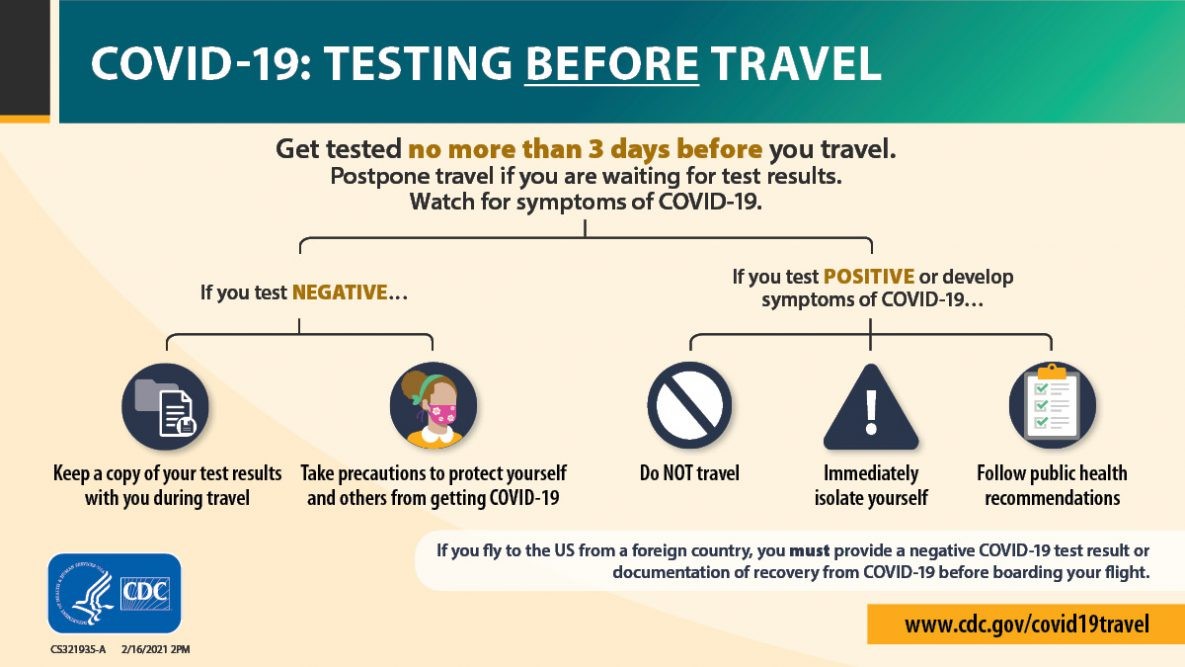
- If you are traveling, get tested with a viral test 1-3 days before your trip. Make sure you have the results of your negative test before you travel. Keep a copy of your results with you during travel; you might be asked for them.
- Do not travel if you test positive. Immediately isolate yourself, and follow public health recommendations.
- Get tested again with a viral test 3-5 days after your trip and stay home and self-quarantine for a full seven days after travel, even if your test is negative. If you don’t get tested, stay home and self-quarantine for ten days after the trip.
- You may have been exposed to COVID-19 on your travels. Regardless of where you traveled or what you did during your trip, take these actions to protect others from getting COVID-19 after travel:
- If there are people in the household who did not travel with you, wear a mask and ask everyone in the household to wear masks in shared spaces inside your home for 14 days after travel.
- Wash your hands often, or use hand sanitizer with at least 60% alcohol.
- Avoid being around people who are at increased risk for severe illness.
- Watch your health: Look for symptoms of COVID-19.
Check Travel Restrictions
State, local, and territorial governments may have travel restrictions in place, including testing requirements, stay-at-home orders, and quarantine requirements upon arrival. For up-to-date information and travel guidance, check the state or territorial and local health department where you are, along your route, and where you are going.
If traveling by air, check if your airline requires any health information, testing, or other documents. Local policies at your destination may require you to be tested for COVID-19. If you test positive on arrival, you may be required to isolate for a period of time.
All air passengers coming to the United States, including U.S. citizens, are required to have a negative COVID-19 test result or documentation of recovery from COVID-19 before boarding a flight to the United States. See the Frequently Asked Questions for more information.
To check your destination’s current threat level for COVID-19, click here.
After You Travel
You may have been exposed to COVID-19 on your travels. You may feel well and not have any symptoms, but you can still spread the virus to others. You and your travel companions (including children) may pose a risk to your family, friends, and community after your travel.
Get Tested and Stay Home After Travel
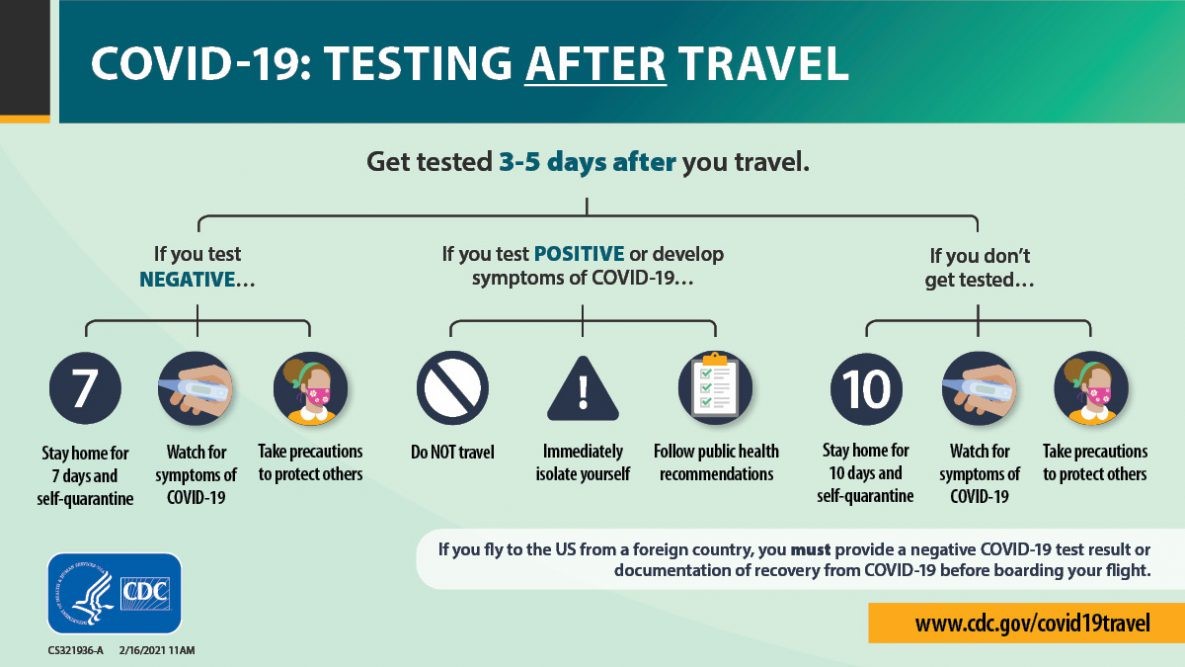
- Get tested with a viral test 3-5 days after travel AND stay home and self-quarantine for a full seven days after travel.
- Even if you test negative, stay home and self-quarantine for the full seven days.
- If your test is positive, isolate yourself to protect others from getting infected.
- If you don’t get tested, stay home and self-quarantine for ten days after travel.
- Avoid being around people who are at increased risk for severe illness for 14 days, whether you get tested or not.
Follow all state and local recommendations or requirements after travel.